

Travelers to Kenya need a yellow fever certificate only when arriving from a country where yellow fever transmission is a risk. If you fly straight from the US, UK, Canada, Australia or the EU, no certificate is needed. Malaria preventive medicine is advised for areas below 2,500 m, and since tap water is not safe, stick to boiled or bottled water.
Yellow Fever Vaccination for Kenya: Who Requires It?
According to the WHO country list, proof of vaccination is required for anyone aged 1 year or over who arrives from a country with yellow fever risk. If you fly directly from the United States, entry does not require the vaccine.
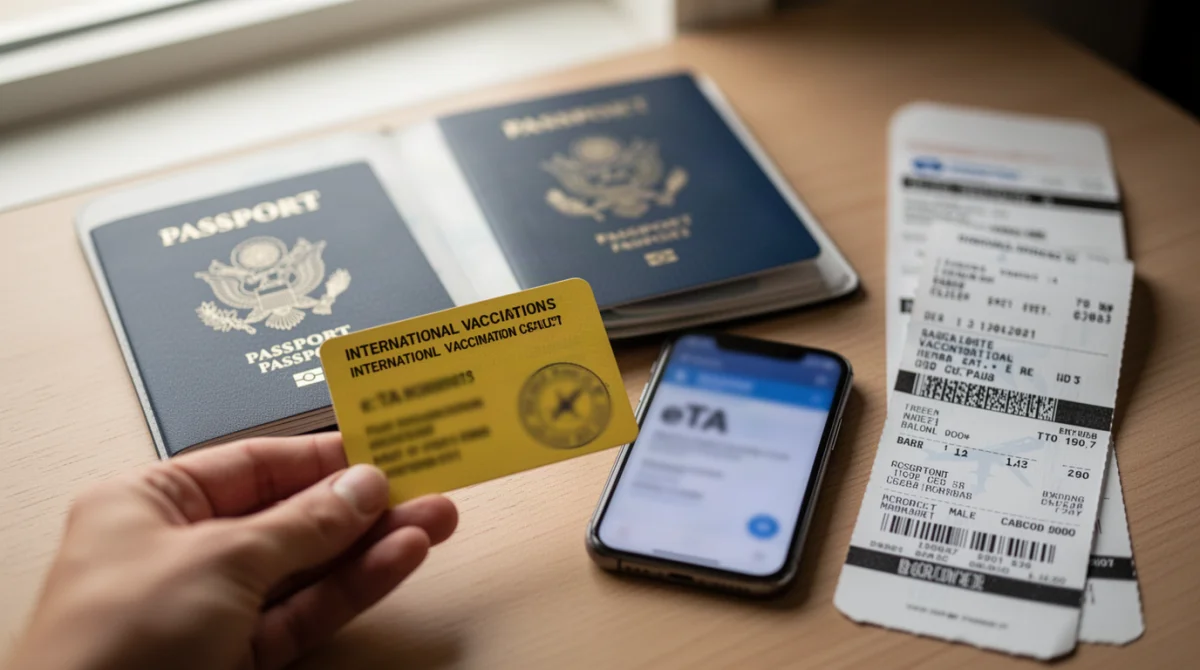
This also holds for travelers from Poland, the UK, Canada, Australia, New Zealand and India, unless their route passes through or begins in a risk country.
WHO recommends the vaccine for every traveler aged 9 months or over, and Smartraveller advises getting vaccinated since yellow fever is widespread in Kenya. The certificate you receive is the ICVP.
Keep a copy with you even when it is not required, because Kenyan authorities carry out spot checks on a regular basis. You should apply for the eTA via the Kenya eTA portal before you travel. Mandatory inbound travel health insurance is built into that application.
Vaccination Exceptions and Malaria Risk
For Nairobi, the counties of the former North Eastern Province and most counties of the former Coast Province, the CDC generally does not recommend the yellow fever vaccine, with Taita-Taveta as the exception. WHO’s list also takes in the entire North Eastern Province.
Malaria is the greater everyday concern. The CDC advises prescription medicine for every area below 2,500 m, game parks included. The options include atovaquone-proguanil, doxycycline, mefloquine and tafenoquine. Resistance to chloroquine has been recorded. In central Nairobi, only precautions against insect bites are needed.
In addition to yellow fever, prepare for:
- Hepatitis A for travelers aged 1 and over who are not vaccinated
- Hepatitis B for unvaccinated travelers younger than 60
- Typhoid, although the vaccine is not 100% effective
- Rabies, since infected dogs are common and vaccines may be available only in larger urban facilities
- Meningococcal vaccine for the meningitis belt in the dry season, roughly December to June
- Routine jabs such as MMR, polio and DTaP
Apply a repellent containing 20% or more DEET, and do not swim in fresh, unchlorinated water because of schistosomiasis. Raw food should be avoided. In cities, medical care is adequate, but elsewhere it may be extremely limited, and facilities require upfront payment, a payment guarantee or insurance confirmation before they treat you.
Why Tap Water Isn’t Safe in Kenya
Smartraveller puts it plainly: buy sealed bottles, skip ice in drinks, brush your teeth with bottled water, and peel fruit yourself.

Cholera is actively spreading in Garissa, Migori, Mombasa, Nairobi, Narok and Turkana counties, though travelers rarely catch it. Keep hand sanitizer with at least 60% alcohol on you. Malaria symptoms may show up as long as a year after your return, so mention your travel history to any doctor.
Frequently Asked Questions (FAQ)
Do I need a Kenya yellow fever vaccination certificate if flying directly from the US, UK, or EU?
No. If you fly directly from these regions, the vaccine is not required for entry. The rule applies to travelers aged 1 or over arriving from countries with yellow fever risk.
In Kenya, can tap water be consumed safely?
No, neither in cities nor anywhere else. Drink only boiled or bottled water, use sealed bottles for brushing your teeth, and avoid ice unless you know it was made from safe water.
For a safari in Kenya, are malaria tablets necessary for me?
Yes, plan for them. The CDC advises prescription prophylaxis for every area below 2,500 m, game parks included. The exception is central Nairobi.
Apart from yellow fever, which vaccinations are advised for Kenya?
Hepatitis A, hepatitis B, typhoid and rabies are commonly recommended, along with meningococcal vaccine during the December to June dry season. Keep routine vaccines such as MMR, polio and DTaP up to date.
At the airport, will my yellow fever certificate be inspected by Kenyan authorities?
They may. Spot checks are carried out regularly, so keep a copy together with your passport and eTA documents, even if your route does not strictly require the certificate.
For entry into Kenya, is travel health insurance compulsory?
Yes. Mandatory inbound travel health insurance is part of the eTA application, and its coverage may be limited. A lot of travelers additionally purchase more comprehensive travel insurance.
If I become ill during travel in Kenya, what steps should I take?
Call 999 or head to the nearest hospital, and expect to pay upfront or confirm your insurance. If a fever develops, tell the doctor where you have been.
Sources and verification
- WHO – International Travel and Health: country list of vaccination requirements, rules for yellow fever entry
- Kenya eTA portal – ETA Eligibility, eTA types, fees and country lists
- Kenya Directorate of Immigration Services – eTA: How to Apply, required documents
- Australian Government Smartraveller – Kenya travel advice, health and water advice
- US Centers for Disease Control and Prevention – Travelers’ health: Kenya, vaccines, malaria and food safety