

If you are heading to Kenya, the electrical setup mirrors what you find in Britain: Type G three-pin sockets running at 240V and 50Hz, exactly as in the UK and Ireland. Clocks there sit at UTC+3 for the whole year, and English shares official status with Kiswahili as one of the country’s two official languages.
Sort out your eTA through the government portal at etakenya.go.ke before you start packing. This site neither gathers fees nor submits applications on your behalf, so double-check the rules in force there ahead of your trip.
Kenya Power Plugs and Voltage: Socket Guide
The outlets you will find in Kenya are Type G, the three-pin 13A design also known as BS-1363. If you are arriving from most of continental Europe, North America, Australia or large parts of Asia, you will need a plug adapter, and in some cases a voltage converter too.
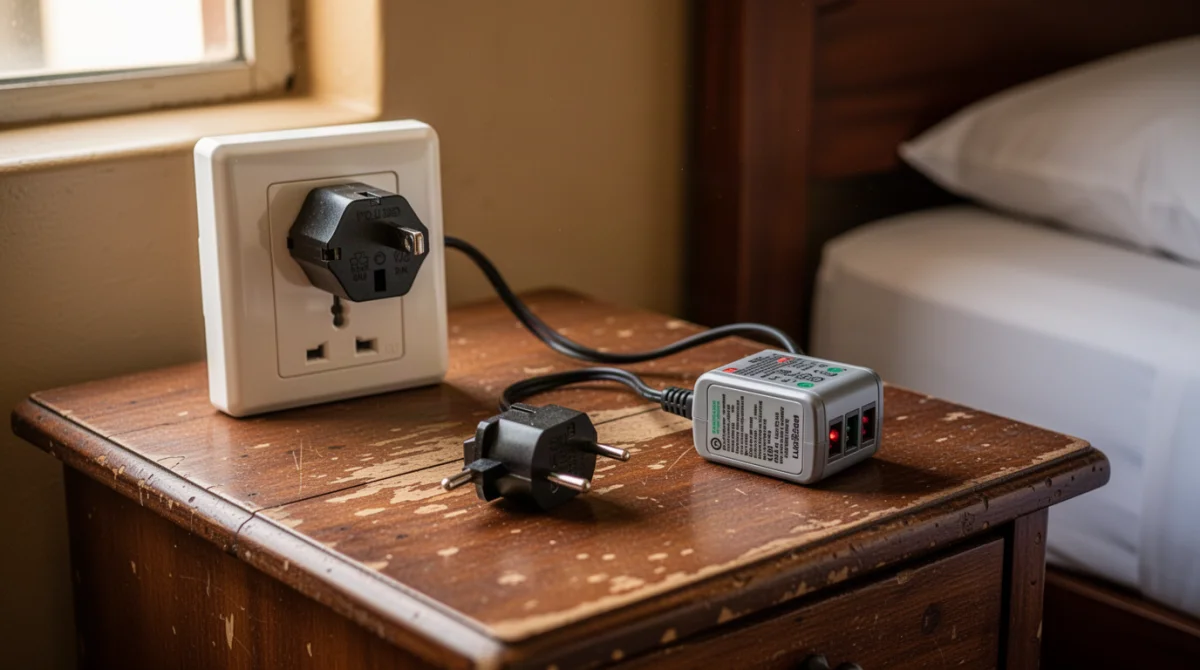
Adapters You’ll Need by Country
Compare the voltage and plug shape used back home with Kenya’s 240V and 50Hz supply.
| Your country | Need adapter? | Voltage compatible? |
|---|---|---|
| United Kingdom, Ireland | No | Yes – 220-240V, same range |
| United Arab Emirates | No – same Type G | Yes – 220-240V |
| Poland | Yes – Type E/F to G | Yes – 230V |
| Australia, New Zealand | Yes – Type I to G | Yes – 230V |
| India | Yes – Type D/M to G | Yes – 230V |
| China | Yes – Type A/I to G | Yes – 220V |
| South Korea, Indonesia | Yes – Type C/F to G | Yes – 220-230V |
| Pakistan | Yes – Type C/D to G | Yes – 230V |
| Bangladesh | Yes – Type A/C/D/G, check; may already carry G | Yes – 220V |
| Saudi Arabia | Yes – Type A/B/G, check; most sockets are Type G | Yes – 220-240V |
| United States, Canada | Yes – Type A/B to G | Check – 120V home, 240V in Kenya |
| Japan | Yes – Type A/B to G | Check – 100V home appliance |
| Philippines | Yes – Type A/B to G | Check – 220V, but confirm device label |
Chargers for phones and laptops usually cope with 100-240V, so read the label on yours. Appliances that draw a lot of power, hair dryers among them, frequently require a voltage converter.
Time Zone and Languages in Kenya
No daylight saving is observed in Kenya, so UTC+3 applies throughout the year. For visitors from the UK and Ireland, that works out as two hours ahead in summer and three in winter. During the US winter, New York trails by eight hours, Dubai runs one hour ahead, and India is two and a half hours ahead.
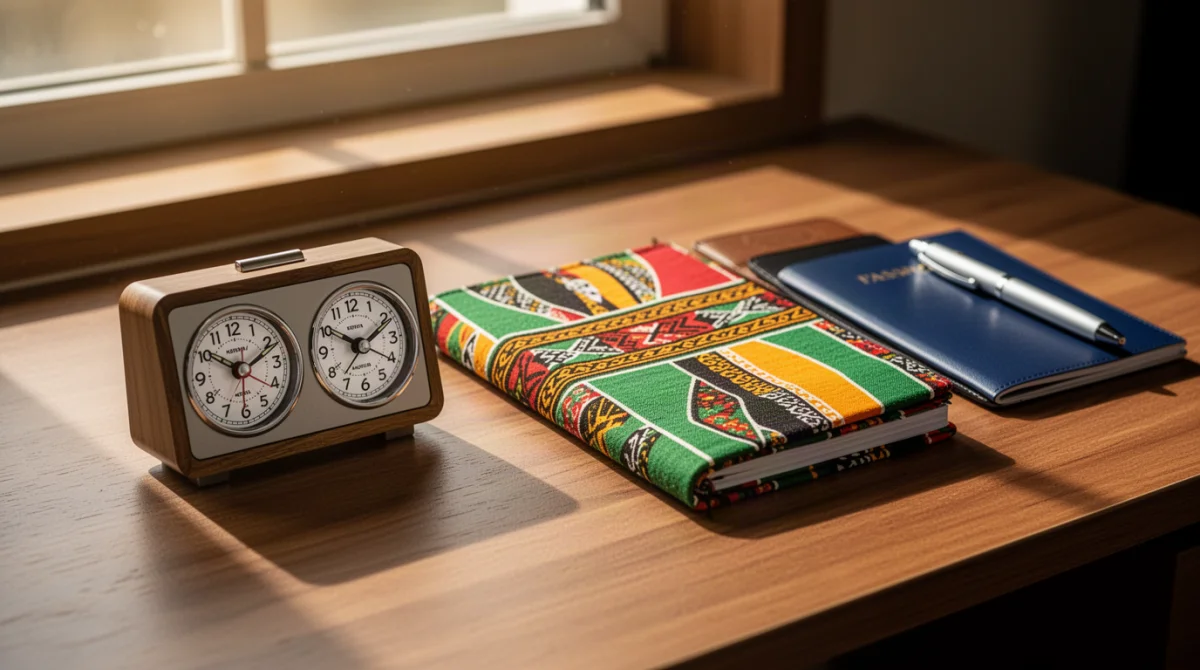
Under Article 7 of the Constitution of Kenya (2010), Kiswahili is the national language, while Kiswahili and English are both official languages. You can get by in English at airports, hotels and national parks, yet in rural markets people tend to open conversations in Kiswahili, so picking up jambo (hello) and asante (thank you) is worth the effort.
Frequently Asked Questions
Do UK plugs work in Kenya without an adapter?
Correct. Kenyan sockets are Type G, rated 240V and 50Hz, matching the standard used across the UK and Ireland, which means an ordinary British plug slots straight in.
Which voltage and frequency are used in Kenya?
The mains supply runs at 240V at 50Hz, which falls inside the 220-240V band. Since that is twice the 120V found in the United States and Canada, appliances from North America might call for a voltage converter.
Is daylight saving time observed in Kenya?
No, it does not. UTC+3 holds throughout the year. What shifts is only the difference in hours, and that happens when Europe, the UK and the US change their clocks.
What languages can I expect to encounter in Kenya?
Both English and Kiswahili hold official status. You will hear plenty of English at airports, lodges and hotels, whereas Kiswahili is the main language in markets and smaller towns.
Which adapter is required for Kenya power plugs and voltage when coming from the US?
For the plug shape, a Type G adapter is what you need. Given that 240V is twice the 120V used in the US, power-hungry devices such as hair dryers may also require a voltage converter, whereas chargers marked 100-240V get by with the adapter alone.
How many hours is Kenya ahead of Europe?
In summer it is two hours ahead of the UK and Ireland, and three in winter, because Kenya never adjusts its clocks. If you are unsure, verify the specific place you are heading to.
Is travel authorisation required before I visit Kenya?
Travellers from most countries, among them US, UK, Polish and Indian citizens, must hold an approved eTA before their journey begins. Applications go through etakenya.go.ke. Expect a fee of roughly USD 30, and make sure your passport remains valid for six months or longer.
Is it possible to use European appliances with Kenya power plugs and voltage?
Yes, provided you have a Type G plug adapter. At 230V, European voltage sits inside Kenya’s 220-240V range, which means most devices will not need a converter.
Sources and Verification
- Kenya Directorate of Immigration Services – How to Apply (verified 2026-10-13)
- Parliament of Kenya – Constitution of Kenya 2010, Article 7 (verified 2026-10-13)
- UN Office for Outer Space Affairs – logistics note for the UN/Kenya conference (2016) (verified 2026-10-15)
- ITU Academy / AFRALTI – Kenya country information 2020 (verified 2026-10-15)